
by Darryl Sparey, co-founder
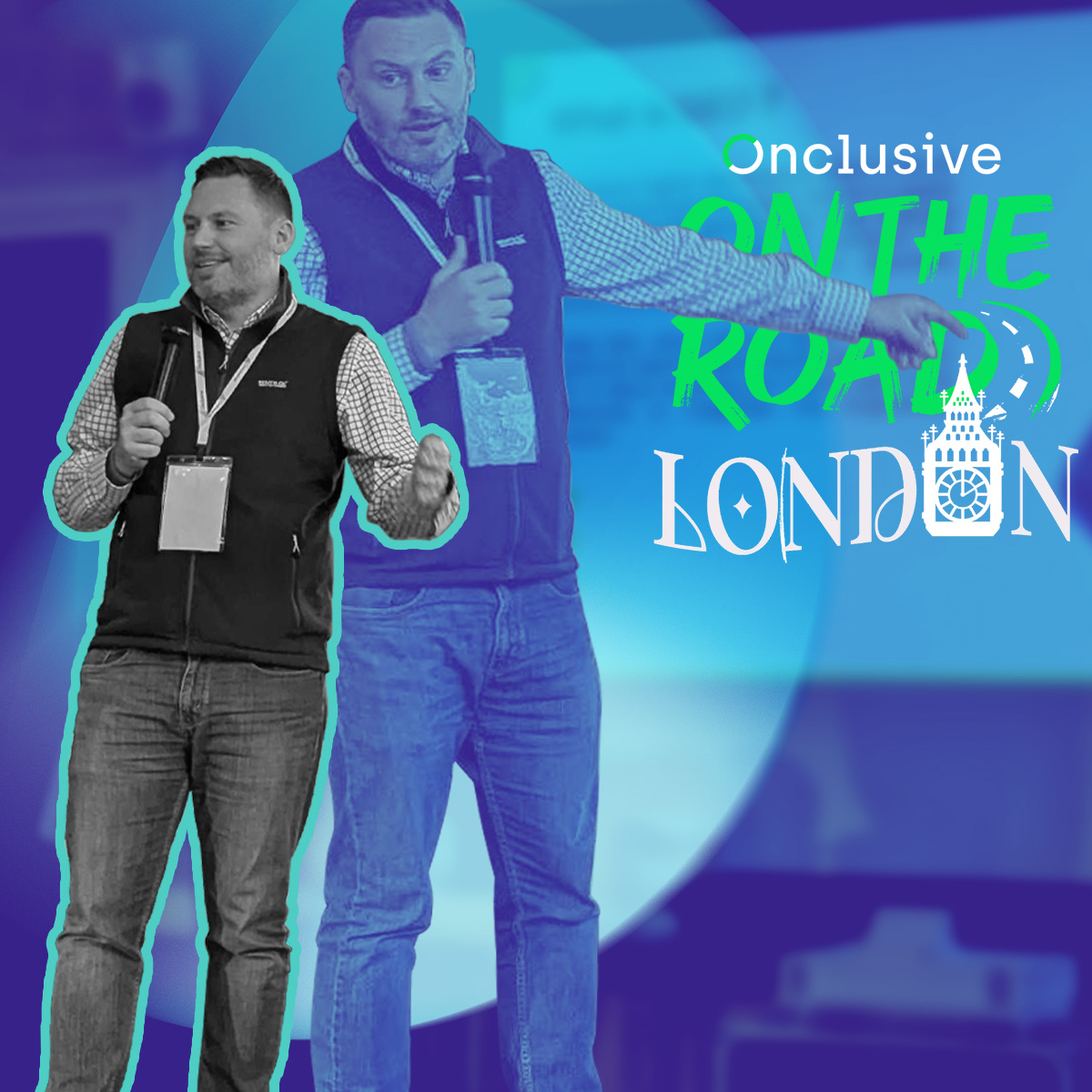
I was recently invited to speak at Onclusive’s “On The Road” event in London, which featured a number of excellent presentations from their senior team, alongside a genuinely strong panel session with senior communications and marketing professionals that I came away inspired by.
I thought I’d share some of the key thoughts and lessons I took from the event.
First, a broader observation. In an increasingly online and fragmented world, there’s huge value in in-person events. And this wasn’t just another event - it was a properly curated experience. From the setting at Old Sessions House to the level of organisation and warmth from the team, it did something many fail to: it made people feel part of the room, not just sat in it.
I was delighted to share a stage again with Onclusive’s Anna Salter, repeating our double-act from two AMEC AI Day events and Onclusive’s recent Miami event. We presented our latest joint research on how brand visibility works in an AI-driven world.
Of course, it’s great to have the *ahem* hard numbers showing that earned media remains the single biggest driver of how large language models describe brands. But unlike many presentations on AI and PR, we went a step further—providing practical advice on how to monitor and measure which on-site content drives traffic and engagement, how to build a “prompt library” to track your brand’s visibility on AI platforms over time, and we shared a real-life case study delivering results across both traditional SEO and Generative Engine Optimisation.
The panel session that followed provided some really thought-provoking insights into what’s driving performance in modern marketing and communications, from some of the most innovative brands across B2B and B2C—from News UK and TalkSport to FixMyCar, Workday and Gymshark.
If there was one theme running through the panel, it was this: the old divides in marketing no longer hold. You need to think more holistically about how ideas work across channels, disciplines and media.
1. Brand without performance is a leaky bucket
Vicky McNamara, VP of Marketing, UK&I of Workday, was refreshingly direct: too much B2B marketing still creates “leaky buckets” that fail to capture the full performance impact of creative ideas. Campaigns drive awareness but don’t connect to commercial outcomes.
She shared an example of sunsetting a major brand campaign that wasn’t delivering leads or opportunities. It wasn’t that the campaign was bad—it just didn’t ladder up to results.
By reallocating budget from broad brand activity into more local, targeted execution, she focused on content, research and organic programmes that actually moved the needle commercially.
2. Content only works if it respects the audience
Amy Stone, Head of Communications at FixMyCar, made a point many B2B teams still struggle with: not everything should be trying to sell. At FixMyCar, B2C content was performing. B2B wasn’t—because it was too sales-led.
The solution wasn’t more budget or output, but a shift in intent. Removing hard Calls To Action (CTAs) and focusing on genuinely useful, informative content that helps businesses operate better. Engagement followed.
It’s a simple but important reminder: if your content feels like marketing, it’s unlikely to perform.
3. Investment in CEO profiling drives trust (and ROI)
Jo Bird framed this through the evolution of marketing—from broadcast, to search, to social.
Audiences now trust people more than brands. Which means brands need to behave more like people.
She emphasised the importance of founder-led storytelling and human voices, which resonated. At Hard Numbers, we’ve previously researched the link between founder profile across earned and social media and fundraising outcomes. The results were clear: founders who invest time, effort and energy into building their profile raise more than those who don’t.
4. Talent, storytelling and distribution are converging
From a media perspective, Will Martin, Head Of Marketing at News UK Broadcasting, highlighted how blurred the lines have become.
Radio talent is now digital talent. Content isn’t just broadcast - it’s participatory. Audiences expect a two-way conversation.
And metrics need to catch up. Views alone aren’t enough. The value comes from how talent, content and distribution combine to build something recognisable and, as Jo Bird highlighted, trusted.
Jack Richards did an excellent job steering the conversation and summing up the key themes. His point was simple: get the story right at the top, align objectives across channels, and build campaigns that connect brand and performance from the outset—while measuring impact throughout the lifecycle.
1. Brand and performance are no longer separate - If your brand activity doesn’t connect to revenue, it will be cut. If your performance activity isn’t supported by brand, it will plateau. The winners are those who build both in from the start.
2. Content needs to earn attention, not demand it - Overly sales-led content doesn’t work, particularly in B2B. The shift is towards useful, credible, audience-first content that builds trust before it converts.
3. Visibility in AI is the new battleground for reputation - Earned and owned media are shaping how AI platforms understand your brand. That makes PR, content and SEO more interconnected—and more commercially important—than ever.
Thanks to Jack, Clem, Anna, Sinthu and the wider Onclusive team for putting on such a thoughtful and well-executed event. If the mark of a good event is the number of notes you take, this was definitely one.
The important next step is putting those lessons into practice.


